Practical guides
Solflare wallet is a self-custody control panel for Solana assets
Solflare wallet is a self-custody Solana wallet built for holding SOL, managing SPL tokens, staking, swapping, signing dApp transactions, and using hardware-key protection from one account interface. It gives the user direct control of private keys while keeping everyday actions practical: receive tokens, inspect balances, connect to Solana apps, review transaction prompts, and sign with a mobile app, browser extension, or supported hardware wallet.
The Solana account, not just the app screen
The important idea is that the wallet interface is only the doorway. Your Solana address, token accounts, staking accounts, and transaction history live on-chain. The app reads that public data, prepares actions, and asks your key to sign when you approve a transfer, swap, stake delegation, or smart contract interaction. That distinction matters because the same address can be restored into another compatible wallet when the recovery phrase or hardware wallet remains under your control.
Solflare wallet focuses on the Solana ecosystem rather than treating Solana as one network in a long list. That shows up in the details: SOL is the native gas asset, SPL tokens appear as account balances, NFT and collectible activity fits into the same address model, and DeFi interactions are built around Solana transaction signing. The interface is meant for people who spend most of their time on Solana rather than jumping across many unrelated chains.
What you do first after creating an address
A new user normally creates a fresh address, writes down the recovery phrase, sets local device security, and then sends a small amount of SOL to the account. SOL pays network fees, so even token transfers and swap approvals require a little SOL in the wallet. After that, receiving assets is a matter of copying the public address or scanning a QR code, while sending assets requires selecting the token, entering the destination, and approving the transaction prompt.
Before using DeFi, it helps to treat the first transaction as a test. A small SOL transfer confirms that the address is correct, the network is Solana, and the wallet signs as expected. Once that works, the same account can interact with decentralized exchanges, NFT marketplaces, staking tools, token launch sites, and other Solana applications through wallet connection prompts.
SOL staking inside the wallet
Staking is one of the main reasons people keep SOL in a dedicated Solana wallet. Solflare wallet lets the user delegate SOL to a validator from inside the interface, track stake accounts, and manage delegation without moving custody to an exchange. Rewards accrue through Solana's proof-of-stake system after stake activates, and the user remains responsible for validator choice, undelegation timing, and keeping enough liquid SOL for fees.
The workflow is straightforward: choose a staking amount, select a validator, approve the delegation, and wait for the stake to activate according to Solana epoch timing. When unstaking, the reverse process also follows epoch timing, so funds do not become liquid at the exact second the user clicks undelegate. That delay is part of the protocol's staking mechanics, not a wallet-specific lock.
Trading and token management on Solana
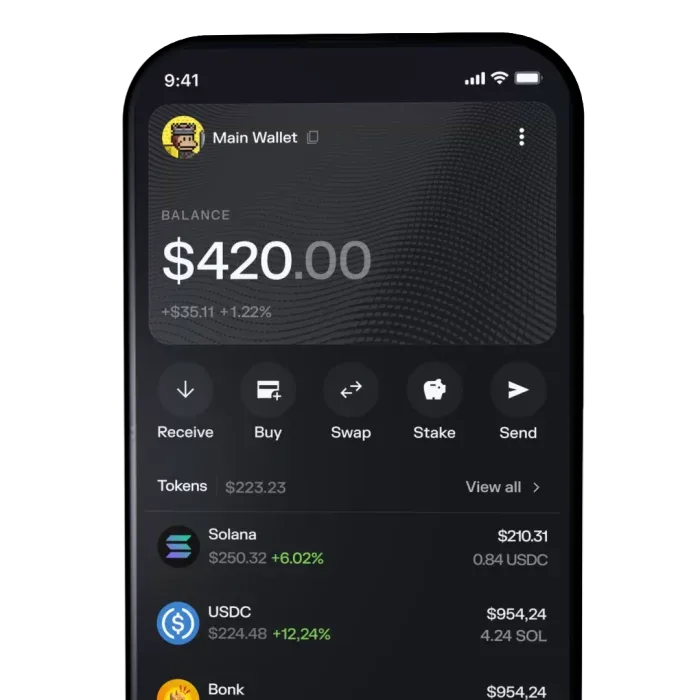
Swaps inside Solflare wallet are designed around Solana tokens such as SOL, USDC, and other SPL assets. A quoted route shows the token you send, the token you receive, and the transaction that needs approval. The wallet signs the transaction, while liquidity and pricing come from the on-chain venues or routing services used for the trade. Network fees remain separate from price movement and route costs.
Token management also includes visibility decisions. Solana addresses receive all kinds of assets, including legitimate tokens, dust, spam NFTs, and promotional tokens. A good interface helps separate meaningful balances from clutter, but the user's judgment still matters when a random airdrop asks for a signature on an unfamiliar site. The safest habit is to read transaction prompts and avoid signing messages that request broad spending authority for an asset you care about.
Hardware wallet protection with Shield
Typically, Solflare's Shield feature points to a serious use case: cold-key signing for a hot Solana interface. With supported hardware wallets, the private key stays on the signing device, while the Solflare interface prepares the transaction and shows the approval flow. This is useful for larger SOL balances, long-term staking, and accounts used regularly with DeFi but protected by a device that must physically confirm signatures.
Hardware signing changes the security model. A stolen laptop or browser profile is less useful without the signing device, and a malicious site still has to present a transaction that the user confirms. It does not remove the need to understand prompts. If a transaction asks to transfer a valuable token or approve an unexpected instruction, the user should reject it rather than relying on the brand name of the site requesting the signature.
Cards, token prices, and daily utility
The official product positioning emphasizes holding assets and spending instantly, which is where Solflare Cards fit into the broader wallet story. Cards connect wallet balances to real-world spending flows, while token price views give users a quick read on markets without leaving the app. These features move the product beyond a passive balance viewer and toward a daily Solana account hub.
Market views, token pages, and price movement tools are useful for people who actively manage positions. They reduce tab switching, but they do not turn a wallet into a research department. Prices move quickly on Solana, especially around memecoins and thin-liquidity tokens, so order previews, slippage settings, and route details deserve attention before a swap is signed.
Connecting to DeFi, NFTs, and Solana apps
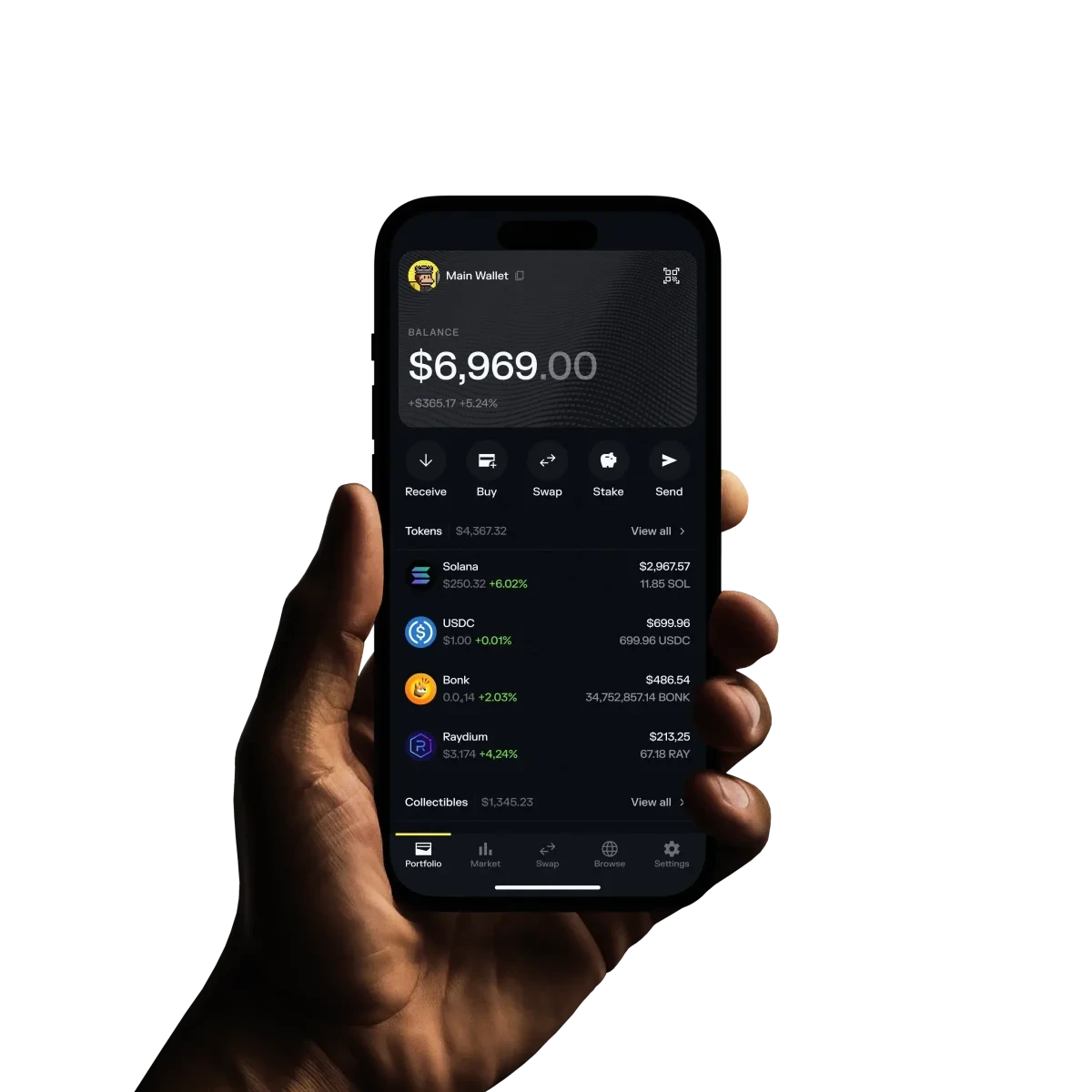
Most Solana applications use wallet connection requests to identify an address and ask for transaction signatures. After connecting, the site sees the public address and proposes actions such as swapping, minting, listing an NFT, claiming a token, staking in a protocol, or opening a position. Solflare wallet acts as the signing layer: it shows the request, the account involved, and the transaction approval step.
That pattern keeps custody with the user while allowing apps to build specialized experiences. A marketplace handles listings, a DEX handles liquidity, a lending protocol handles deposits and borrows, and the wallet signs only the transactions the user approves. The best everyday practice is simple and specific: disconnect sites you no longer use, keep separate accounts for experiments, and reserve hardware signing for assets that would be painful to lose.
Mobile app, extension, and account recovery
The product is available as a mobile wallet and browser extension, which covers the two places Solana users spend the most time: phones and desktop browsers. Mobile works well for QR codes, notifications, quick transfers, and checking balances. The extension fits desktop DeFi, marketplaces, and multi-tab research. Using both with the same account requires disciplined recovery phrase handling because the phrase controls the assets, not the device that displays them.
Recovery should be treated as a one-time setup responsibility rather than an afterthought. Store the seed phrase offline, keep it away from screenshots and cloud notes, and understand that support staff, moderators, and wallet interfaces do not need it for normal troubleshooting. If the phrase is exposed, moving assets to a new address is the clean fix because the old key can no longer be considered private.
Phantom and exchange wallets beside Solflare
Phantom is the best-known Solana wallet alternative, with a polished multi-chain direction and a broad consumer audience. Backpack appeals to users who follow xNFT-style experiences and the Mad Lads ecosystem. Exchange wallets from platforms such as Coinbase or Crypto.com suit people who prioritize account login and hosted recovery over direct private-key control. Solflare wallet is strongest for users who want a Solana-first self-custody interface with staking, trading, hardware wallet support, and dedicated ecosystem tools.
The right choice depends on the account's job. A small mobile spending wallet, a DeFi testing wallet, a long-term SOL staking wallet, and an exchange account each solve different problems. Many experienced users split those roles instead of forcing one address to carry every risk and every workflow.

When this wallet makes the most sense
In most cases, Solflare wallet fits users who already hold SOL or plan to spend meaningful time in the Solana ecosystem. It handles the core jobs clearly: custody, transfers, staking, swaps, dApp signing, market views, and hardware wallet workflows. Its value comes from combining those Solana-specific tasks in one interface while preserving the private-key model that makes self-custody different from an exchange account.
Someone who only wants to buy and sell SOL once a year may be comfortable with a regulated exchange account. Someone who stakes SOL, collects NFTs, tests apps, trades SPL tokens, or wants hardware-backed signing needs a dedicated wallet. In that setting, Solflare wallet gives the address a practical operating system for Solana rather than just a place to look at balances.
Things people ask about Solflare wallet
- Does Solflare support Ledger hardware wallets for SOL staking?
- Yes. Solflare supports hardware wallet workflows for Solana accounts, including staking actions that are prepared in the wallet interface and signed on the hardware device. The private key remains on the device, while the app shows the staking transaction and sends the signed transaction to Solana. Users still need SOL for network fees and should review validator details before approving a delegation.
- What fees do I pay when swapping tokens in Solflare?
- A swap involves Solana network fees plus any route, liquidity, spread, or service costs shown in the quote flow. The exact cost changes with the token pair, liquidity depth, route, and current market conditions. SOL is required for the network fee even when the trade involves other SPL tokens such as USDC or a memecoin.
- Can I recover my Solflare account on another device?
- Yes, a self-custody account can be restored on another compatible device with the correct recovery phrase, or accessed with the same hardware wallet if the account was created through that device. The recovery phrase should stay offline and private. Anyone with that phrase can control the on-chain assets associated with the address.
- Which Solana tokens show up in Solflare?
- Solflare displays SOL and SPL tokens associated with the wallet address. Common assets such as USDC and many Solana ecosystem tokens appear as balances when they exist in the account. Spam tokens and unwanted NFTs can also arrive at public addresses, so visibility in a wallet does not mean an asset is trustworthy or valuable.
- Is Solflare available on mobile and desktop?
- Yes. Solflare is available through mobile apps and a browser extension, giving users a phone-based wallet for QR codes and quick transfers plus a desktop-friendly option for Solana dApps. The same self-custody account model applies across devices: the app displays and signs for the address, while the recovery phrase or hardware key controls access.
- Do I need SOL before receiving other Solana tokens?
- You can receive SPL tokens at a Solana address, but you need SOL to pay network fees when sending tokens, swapping, staking, or interacting with apps. Keeping a small SOL balance prevents failed transactions caused by insufficient gas. This is true even when the asset being moved is USDC or another Solana token.