Practical guides
Solflare wallet is a Solana self-custody wallet built around SOL staking, Shield hardware-wallet protection, and direct dApp access
Solflare wallet is a self-custody wallet for holding SOL, managing SPL tokens, staking to Solana validators, trading on Solana, and connecting to dApps while keeping the user in control of the private keys. Its standout angle is the combination of everyday mobile and browser access with staking tools, live token information, human support, and the Shield hardware-wallet route for users who want stronger signing protection.
Managing SOL, tokens, and NFTs from one Solana account
The wallet organizes the main Solana jobs around a single account view: receive SOL for network fees, hold SPL tokens, inspect balances, view collectibles, and move assets between addresses. That matters on Solana because the same wallet frequently touches DeFi positions, NFT marketplaces, memecoin trades, token swaps, and app permissions during a single week of use.
Solflare wallet also fits the normal Solana asset model. SOL pays transaction fees and secures the network through staking , while SPL tokens represent stablecoins, governance tokens, liquid staking tokens, memecoins, and application assets. The interface gives those assets a familiar portfolio shape without changing the self-custody responsibility underneath: the recovery phrase and signing approvals remain central to access.
How native SOL staking works inside the wallet
Staking through Solflare wallet uses Solana native delegation. A user chooses a validator, delegates SOL, and receives protocol-level staking rewards as the validator participates in consensus. The SOL remains tied to a stake account rather than being swapped into a derivative token, which makes this route simpler than liquid staking for users who mainly want network participation and a clear delegation record.
The staking flow still requires judgment. Validators differ by commission, performance, identity, and uptime history, and reward rates move with network conditions. Unstaking also follows Solana epoch timing, so delegated SOL does not return to ordinary spending status instantly. This is a normal part of Solana staking mechanics, not a separate wallet penalty.
Shield adds a stronger signing path for high-value activity
Shield is the security-specific part of the Solflare product line that matters most to users who treat their wallet as more than a casual browser extension. Hardware-wallet style signing separates approval of sensitive transactions from the everyday screen where websites, browser tabs, and messages compete for attention. That separation is valuable when the account holds staked SOL, NFTs, or tokens used across multiple apps.
The strongest setup pairs Shield or another supported hardware signing method with conservative app permissions. A transaction should make sense before it is approved: the asset, destination, program, and amount need to match the action the user intended. Solana transactions settle quickly, so a mistaken signature becomes final fast.
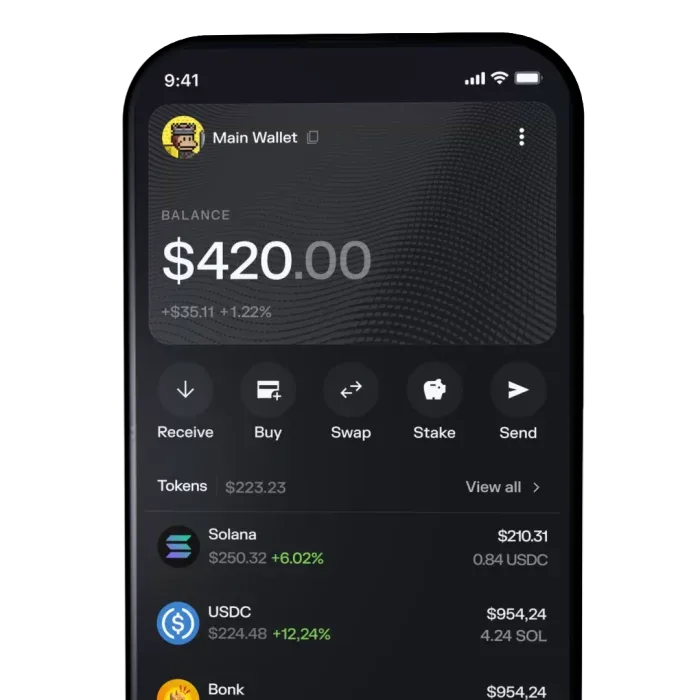
Trading and token discovery on Solana without leaving the wallet
Solana users move quickly between token pages, swaps, charts, and dApps. Solflare wallet brings trading context closer to the account by showing token information and market movement alongside balances. That reduces the need to paste addresses into several unrelated sites before making a simple decision, especially when checking whether a token is liquid, active, or newly volatile.
This does not turn the wallet into an exchange account. It remains a self-custody interface that prepares and signs blockchain transactions. Network fees are paid in SOL, swap pricing comes from liquidity venues and routing, and failed or rejected transactions still reflect the realities of onchain execution. The advantage is cleaner context at the moment of action.
Connecting to dApps and removing old approvals
Wallet connections are part of the daily Solana experience. DeFi apps, NFT markets, games, launchpads, and staking dashboards request permission to view an address and ask for signatures when the user takes an action. Solflare wallet supports that connect-and-sign workflow while giving users a place to manage trusted apps and reduce lingering access.
Old connections deserve periodic cleanup. If a site is no longer used, removing it from the trusted app list reduces noise and makes future prompts easier to understand. A connection by itself does not hand over a recovery phrase, but a signed transaction authorizes exactly what the transaction says, so clear approval habits matter more than the connect button.
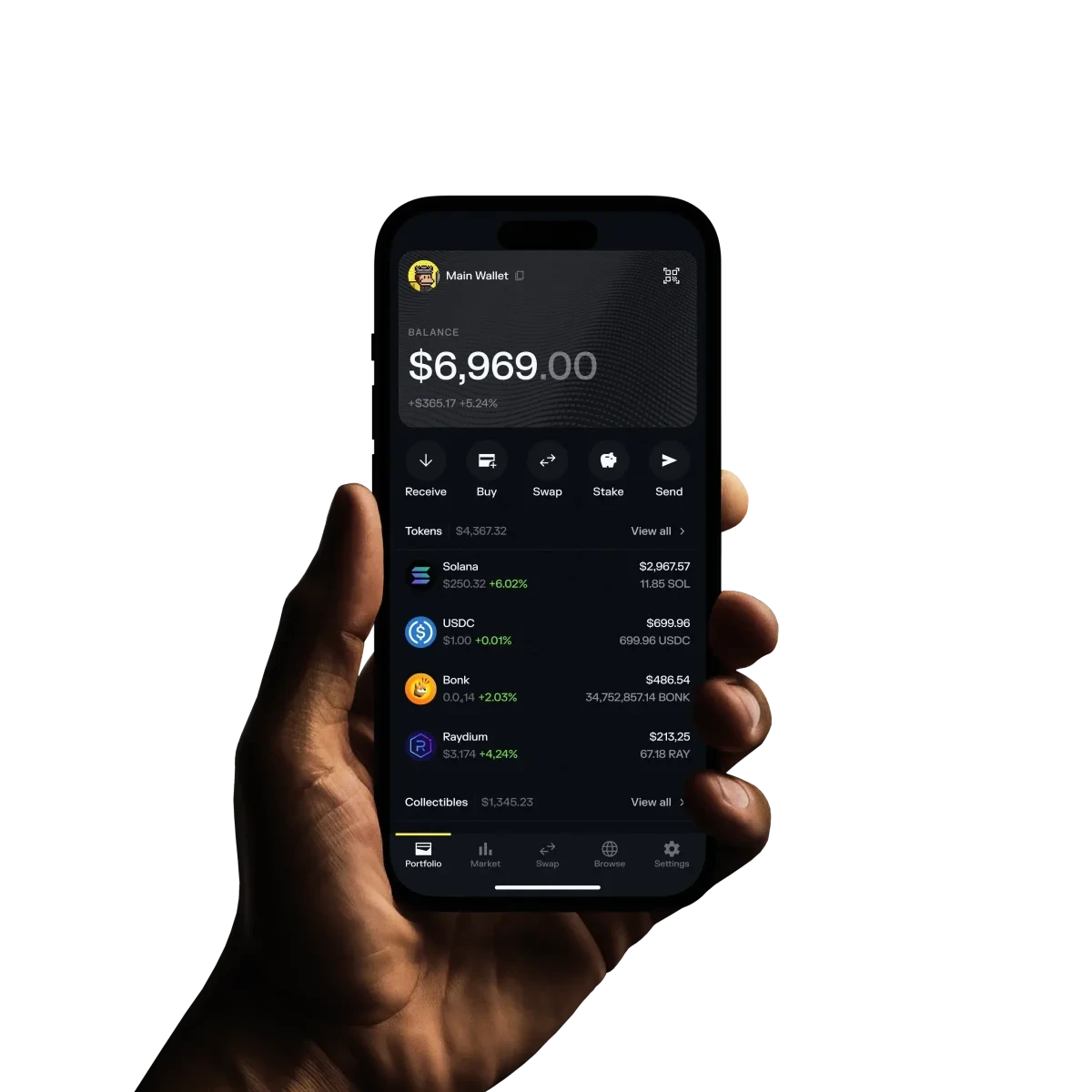
Getting started on mobile, extension, or desktop browser
New users normally begin by installing the mobile app or browser extension, creating a wallet, and storing the recovery phrase offline. After that, the practical first step is receiving a small amount of SOL, because SOL pays the tiny network fees required for token transfers, swaps, staking changes, and dApp interactions. Without SOL in the account, assets can be visible but difficult to move.
A simple first setup looks like this:
- Create or import the wallet only inside the official app or extension flow.
- Store the recovery phrase offline where it will survive device loss.
- Add SOL before attempting swaps, staking, or NFT transfers.
- Test with a small transaction before moving larger balances.
- Review trusted apps after experimenting with new dApps.
Once the basics are working, Solflare wallet becomes a control panel for the broader Solana ecosystem rather than just a place to see a balance.
Where Magic, token prices, and support fit into the experience
Typically, Solflare highlights newer product areas such as Magic AI Assistant, token price pages, and around-the-clock human support. These features address a real problem in crypto wallets: users need context while acting, not after they have already signed something confusing. Market data helps with asset recognition, assistance helps with navigation, and support gives users a direct path when the interface or a transaction status is unclear.
The best use of these tools is operational. They help a user understand what is on the screen, locate features, and interpret wallet activity. Private keys, recovery phrases, and final transaction approval still belong to the user, which is the defining tradeoff of self-custody.

Phantom, Backpack, and MetaMask are the closest comparison points
Anyone choosing a Solana wallet also sees Phantom, Backpack, and MetaMask in the surrounding conversation. Phantom is a polished multi-chain wallet with strong Solana recognition. Backpack is closely associated with xNFT-style app experiences and the Mad Lads ecosystem. MetaMask dominates Ethereum and EVM networks, while Solana support depends on the current MetaMask Solana flow and the apps involved.
| Wallet | Best-known strength | Solana fit |
|---|---|---|
| Solflare | Deep Solana focus with staking, Shield, token tools, and support | Strong fit for SOL staking and Solana-native dApps |
| Phantom | Simple consumer wallet experience across popular chains | Strong fit for broad Solana use and casual trading |
| Backpack | App-style wallet environment and NFT culture | Strong fit for users drawn to xNFTs and ecosystem collectibles |
| MetaMask | Default wallet for Ethereum and many EVM apps | Useful when a user already lives in EVM accounts and bridges into Solana |
The decision is less about a single universal winner and more about the chain where most activity happens. A user who stakes SOL, checks Solana tokens, and signs Solana dApp transactions daily gets the cleanest fit from a wallet designed around that ecosystem from the start.
Costs, recovery, and everyday risk boundaries
Using Solflare wallet does not add a special fee for simply holding assets. Onchain actions still pay Solana network fees in SOL, and swaps include liquidity pricing, routing effects, and any venue-level costs shown during the transaction flow. Staking rewards and validator commission belong to the Solana staking model, so those details should be read inside the staking screen before delegation.
Recovery is the part users should treat with the most seriousness. A lost device is manageable when the recovery phrase is stored correctly; a lost recovery phrase creates a hard access problem. No support agent, wallet interface, or dApp connection replaces that phrase. For users holding meaningful balances, pairing Solflare wallet with Shield and a disciplined backup routine gives the account a sturdier operating model.
Frequently asked questions about Solflare wallet
- Does Solflare wallet charge extra fees for staking SOL?
- Solflare wallet does not need a separate holding fee for a staking account, but staking still follows Solana network mechanics. Transactions such as creating a stake account, delegating, splitting, or withdrawing require small SOL fees. Validator commission also affects net rewards because each validator sets its own commission rate. The staking screen is the place to review the validator and the transaction details before approving delegation.
- Can I use Solflare Shield with an existing recovery phrase?
- Shield is meant to improve the signing path for wallet activity, but the right setup depends on how the account was created and imported. If an existing hot wallet already holds assets, many users move important funds to a fresh hardware-protected account instead of reusing a phrase that has touched everyday devices. That approach gives the stronger signing setup a cleaner security history.
- How long does unstaking SOL take in Solflare?
- Unstaking SOL follows Solana epoch timing. After a user deactivates a stake account, the SOL becomes withdrawable once the network finishes the relevant deactivation period. That timing is measured by Solana epochs rather than by a fixed wallet countdown chosen by Solflare. The wallet shows the stake account status, so users can see when delegated SOL has returned to withdrawable balance.
- Moving ETH from MetaMask into Solflare, what route is typical?
- ETH on Ethereum does not become SOL inside a Solana wallet by a simple address-to-address transfer. Users normally use a centralized exchange that supports both assets, or a bridge and swap route that supports Ethereum-to-Solana movement. Each route has different gas costs, bridge risk, and token format details. Sending Ethereum ETH directly to a Solana address without a supported bridge flow creates a serious transfer problem.
- Why does a Solflare dApp connection still ask for signatures later?
- A connection lets a site see the public wallet address and request actions, but it does not approve every future transaction automatically. Later prompts appear when the dApp needs a signature for a swap, stake change, mint, transfer, or program interaction. The important detail is the transaction request, not merely the connected status. Removing unused trusted apps keeps the approval list easier to manage.
- Is a small amount of SOL required before using tokens in Solflare?
- Yes, SOL is needed for Solana network fees. A wallet can display SPL tokens without a large SOL balance, but transfers, swaps, staking actions, and dApp transactions need SOL to pay fees. The fee amount is typically small compared with many other chains, yet an account with no SOL runs into failed or blocked actions when it tries to move tokens.
- What happens if I delete the Solflare app from my phone?
- Deleting the app removes local access from that device, not the assets recorded on Solana. The account can be restored on a new installation when the recovery phrase or hardware-wallet access is available. Without that recovery material, reinstalling the app does not recreate control of the same wallet. The blockchain still holds the balances, but signing authority depends on the keys.